What You Carry Forward Now Matters
What You Carry Forward Now Matters: Cornerstone Institute Graduation 2026 Ā On 1 April, we witnessed what it takes to…
Discover your future at Cornerstone Instituteās School of Education. We offer PGCE programmes in the Foundation Phase, Intermediate Phase, and Senior & FET Phase, as well as a Bachelor of Arts degree with a major in Alternative Education. All programmes are currently fully online. Shape your success with us.
Everything you need to know about specialisations, practicals, registration, modules, and support ā all in one place.
1. Why canāt I complete my PGCE within a year?
The completion of the PGCE within one year is only considered feasible if a student has already fulfilled the majority of the required prerequisite undergraduate (teaching subject) modules in their previous qualification. Exceptions may be considered solely in cases where there is a single prerequisite undergraduate module that is stipulated on the studentās acceptance letter. Under such circumstances, the student may then be granted permission to concurrently fulfill this module alongside the obligatory PGCE modules.
Students who have multiple prerequisite undergraduate modules to complete, in addition to the PGCE modules, are required to extend the duration of their PGCE qualification to two or more years. Registering for more than five modules per semester may lead to overwhelming pressure. Hence, the PGCE is structured as a one-year qualification for full-time students, while part-time students follow a two-year timeline.
Students who exceed the maximum number of credits allowed require explicit authorisation from the Deputy Dean of the School of Education as well as the Executive Dean. Please reach out to our School of Education Faculty Officer at sharon-leee@cornerstone.ac.za to request a review form.
7. What is the minimum and maximum amount of years I am able to complete my PGCE in?
The minimum duration for completing the PGCE qualification is one year, and this applies exclusively to students with a sole prerequisite undergraduate module required for completion. Conversely, the maximum timeframe for PGCE completion is three years. However, exceptions to surpass this three-year period may be considered contingent upon a student's circumstances, such as unforeseen illness, personal loss or relocation abroad.
13. What is the minimum and maximum amount of credits that I am able to register for within a year?
Both PGCE FP and IP students have the maximum capacity to register for a total of 150 credits annually, with a maximum allocation of 75 credits per semester. This credit allocation encompasses both prerequisite undergraduate modules and the obligatory PGCE modules.
2. What will my teaching specialisations be after obtaining my PGCE qualification?
A student's subject specialisation is contingent upon meeting specific admission requirements outlined by the DHET. This determination is explicitly communicated in the Acceptance Letter. Cornerstone Institute offers prerequisite undergraduate modules for English, Afrikaans, isiXhosa (from 2025), Mathematics, and Life Skills. For Intermediate Phase students, prerequisite modules for Science & Technology and Social Science are not provided ā those may be fulfilled externally for non-degree purposes.
Following a thorough assessment of your academic transcripts, your eligibility for specific subject specialisations will be conclusively determined and explicitly outlined in your Acceptance Letter.
20. I do not understand Afrikaans ā can I substitute it for another language?
Should you opt not to pursue Afrikaans as your other language teaching subject specialisation, the only alternative language option available at Cornerstone would be isiXhosa. In this case, it is essential to fulfil the undergraduate prerequisites by completing two isiXhosa modules, starting from the 1st semester of 2025. This step is crucial for the registration of the isiXhosa: First Additional Language Didactics.
21. Is the PGCE qualification internationally recognized?
The PGCE qualification is internationally recognised and accredited by the Council on Higher Education. However, each country has its own unique set of professional teaching standards. For those wanting to teach in Australia or Hong Kong (stricter requirements), please contact edu-admin@cornerstone.ac.za for guidance and assurance that the PGCE meets the necessary criteria.
3. Where can I find my list of textbooks for registered modules?
We do not have a consolidated list. Each module outline will specify required readings under the resources tab on Funda. If you have questions about purchasing textbooks, contact your lecturer directly via their Cornerstone email address (available on the module outline).
4. Are there any exams required for any of my modules?
None of the PGCE modules require formal examinations; assessment is primarily based on assignments, occasionally supplemented by timed tests. However, there might be online exams for students who are required to complete specific prerequisite undergraduate Sociology or Psychology modules to fulfill admission requirements for Life Skills.
7. Would I be able to complete a 1st semester module within the 2nd semester and vice versa?
All PGCE modules are bound to specific semesters. Completing a 1st semester module in the 2nd semester is not allowed. The only exceptions are prerequisite modules (e.g., English for Education A & B, Afrikaans for Education A & B, Teaching Practicals) which can be completed across semesters but A & B components cannot be done simultaneously.
5. Can I complete my Teaching Practicals (TP) consecutively within the same semester?
Unfortunately, this will not be permitted and is strongly advised against. Practical A should be completed early, Practical B midway, and Practical C in the last semester. During critical emergencies, you may request special permission by contacting the Teaching Practice Coordinator at anelc@cornerstone.ac.za for case-by-case evaluation.
12. Can I register with SACE if I am still completing my PGCE?
Yes, you may apply for a provisional SACE number while completing your PGCE. Cornerstone supports students by furnishing required documentation. We urge you to apply for provisional SACE registration before you start your Teaching Practice as certain principals ask for this.
6. Where can I find my online tutorial timetable?
Your online tutorial timetable is available on the School of Education Plenary site under the "Resources" section tab on Funda.
8. What happens if I miss a tutorial?
All tutorials are prerecorded and accessible later under the "Khuluma" tab within the recordings section. Steps: Click Khuluma ā find the tutorial link ā Join Meeting (Listen only). Recording available ~1 hour after session under "Recording" section. Also attend live plenary sessions on Thursdays 5pmā5:30pm.
9. How can I go about joining the various WhatsApp group chats?
Explore messages in Funda chat tabs. Request to join groups via the class representative. Each module designates a class representative; link is usually shared during the 1st or 2nd tutorial. Be vigilant about scammers.
14. Do I have to pay an initial fee every year when I register?
Yes, students are obligated to settle their initial fee payment once every year, and this payment should be settled before proceeding with registration. For clarification contact finance at bursar@cornerstone.ac.za or jamie-leed@cornerstone.ac.za.
15. What do I do if I want to make changes to my registration?
Reach out to helpdesk@cornerstone.ac.za. Changes should be requested within the first two weeks of the semester to avoid financial penalties. After that period, changes result in a penalty.
16. Is my proof of registration automatically sent after registering for modules?
No, it is not automatic. Your proof of registration is issued once any outstanding fees are settled (returning student) or upon making the initial fee payment for the year (newly accepted students).
18. Do I have to pay an initial fee every semester?
No, the initial fee payment must be settled only once annually. If you commence in the second semester, you pay the initial fee that year, and again the following year. It acts as a partial contribution towards overall fees.
10. What do I do if I feel a lecturer has marked my assignments unfairly?
First, engage in direct consultation with the lecturer via email. If concerns persist, escalate to the School of Education Faculty Officer at sharon-leee@cornerstone.ac.za for further resolution.
11. How will I know what remaining modules I still have to complete?
Contact the Registrarās Department at helpdesk@cornerstone.ac.za. Additionally, mark completed modules on your curriculum grid to monitor progress.
19. What are the changes that took place from 2023 to now regarding modules?
Key changes: isiXhosa prerequisite modules commence 1st semester 2025; Philosophy of Education and Education & Ethics merged into Educational Philosophy and Ethics; new School of Education plenary site launched in 2024 as a central hub for events and resources.
Embark on a transformative journey at Cornerstone Institute, where education aims to change lives. The School of Education is committed to providing a holistic educational experience that prepares students to excel in diverse educational contexts and fosters lifelong learning.
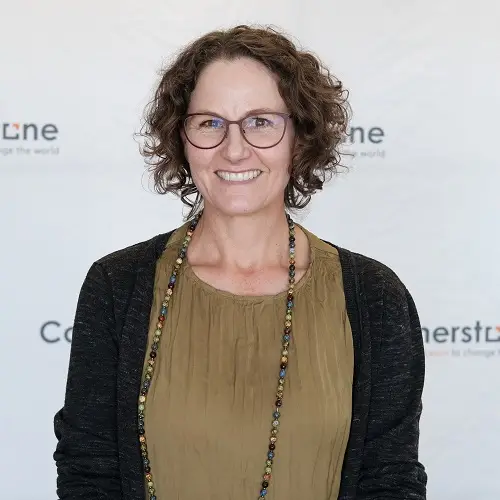
Education Specialist & Programme Coordinator
With decades of experience in teacher development, Susan leads our PGCE and Alternative Education initiatives, ensuring each student receives mentorship grounded in innovation and excellence.
šÆ Cornerstone Institute | Education Department ā Rooted in holistic transformation, we deliver forward-thinking programmes that respond to South Africa and global educational demands.
Designed for students to qualify as professional educators in the Foundation Phase. Applicants must possess a three-year degree or recognised national diploma at NQF level 6, with a minimum of 360 credits.
š¹ Specialisation focus: Early literacy, numeracy, and holistic child development.
Designed for students seeking to qualify as professional educators in Intermediate Phase. Applicants must hold a three-year degree or recognised national diploma at NQF level 6, with a minimum of 360 credits.
š¹ Subject specialisation: Languages, Mathematics, Natural Sciences & Social Sciences.
PGCE Students may need to complete specific prerequisite undergraduate modules to meet entry requirements for specific teaching subject specializations. These modules may be taken prior to or alongside PGCE modules but do not count towards the required PGCE credits.
In response to the growing demand for professional educators in South Africa and globally, Cornerstone currently offers two Post Graduate Certificates in Education, in Foundation Phase and Intermediate Phase.
Critical analysis of education, experiential learning, community empowerment, and interdisciplinary studies ā empowering educators to spark lasting change.
A specialized undergraduate degree program that focuses on innovative and non-traditional approaches to education. Designed for individuals who are interested in exploring Alternative Educational Philosophies, Methods and practices outside of mainstream educational systems.
⨠A unique pathway for individuals passionate about reimagining education and making a positive difference in the lives of learners through creative and unconventional educational practices.
āThe range of Bachelor of Art degrees offered at Cornerstone provides students with transferable skills for almost any career choice.ā Ideal for community upliftment, social work, mental health, and education.
PGCE is a qualification that provides training and preparation for individuals who aspire to become teachers or educators in primary or secondary schools. Overall, the PGCE is a respected qualification that prepares individuals for a rewarding and impactful career in teaching. We offer both the Foundation Phase and Intermediate Phase.
Equips graduates with knowledge, skills, and understanding to become effective teachers. Combines academic study with practical teaching experience. Critical analysis of education, experiential learning, autonomy and growth.
Theoretical coursework + teaching placements. Covers educational theory, curriculum development, teaching methods, assessment, and classroom management.
Usually one academic year full-time. Part-time options may extend duration accordingly.
Relevant undergraduate degree (subject-related) plus specific academic qualifications in English and Mathematics as required. Minimum NQF level 6 with 360 credits.
Hands-on experience in schools under experienced mentors. Apply learning in real classroom settings ā essential component.
Written assignments, reflective journals, lesson observations, presentations, teaching practice & professional conduct.
* PGCE Students may need prerequisite undergraduate modules (taken prior or alongside) that do not count towards PGCE credits but meet subject specialization requirements.
Watch the official video to experience our vibrant learning community, state-of-the-art facilities, and transformative education approach.
š„ Why Cornerstone? Our School of Education fosters lifelong learning, critical thinking, and a commitment to social change. Whether you choose PGCE, BA with Alternative Education, or professional development, we nurture educators who shape the future.
⨠āEducation aims to change livesā ā Join a community that believes in holistic growth, innovation, and excellence.
Cornerstone Institute's School of Education offers a transformative journey for aspiring educators. Our combination of an excellent reputation, world-class accreditation, cutting-edge research, expert faculty, modern teaching methods, and a supportive community equips you with the knowledge, skills, and experience to excel in the dynamic world of education and make a lasting impact on the lives of your students. Join us and become a changemaker in the future of education.
Dedicated mentors, researchers & education leaders ā shaping the future of learning. Hover over a staff member's image and click the 'View Details' button to access their biography.
In 2023, I began my journey with Cornerstone to pass a certificate cum laude. The PGCE program was intense and challenging but well-structured. I completed it in a year, specializing in the Foundation Phase. Throughout my journey, the support of my lecturers and fellow students was invaluable. I am now an IC lecturer and grateful for the opportunities my PGCE has opened up. Studying while being a mom and living with epilepsy was not easy, but having a supportive community made all the difference. I urge all students to form support groups and put their minds to the mission at hand.
What You Carry Forward Now Matters: Cornerstone Institute Graduation 2026 Ā On 1 April, we witnessed what it takes to…
Date: 23 September 2024Format: Online DialogueSpeakers: Prof. Grant Farred & Prof. Crain SoudienIn this intellectually rich session, author Prof. Grant…
Dominic Cranfield’s Journey with a BA in Alternative Education Dominic Cranfield’s experience pursuing a Bachelor of Arts in Alternative Education…
Embark on your PGCE Journey with Cornerstone Institute: A message from Dr. Susan Gredley, Deputy Dean of Education Hello future…
Cornerstone Global Students: Enrollment at the Education Department
Explore the international reach of our student community as they engage in learning both online and on campus.